Loader

the history of hayabusa

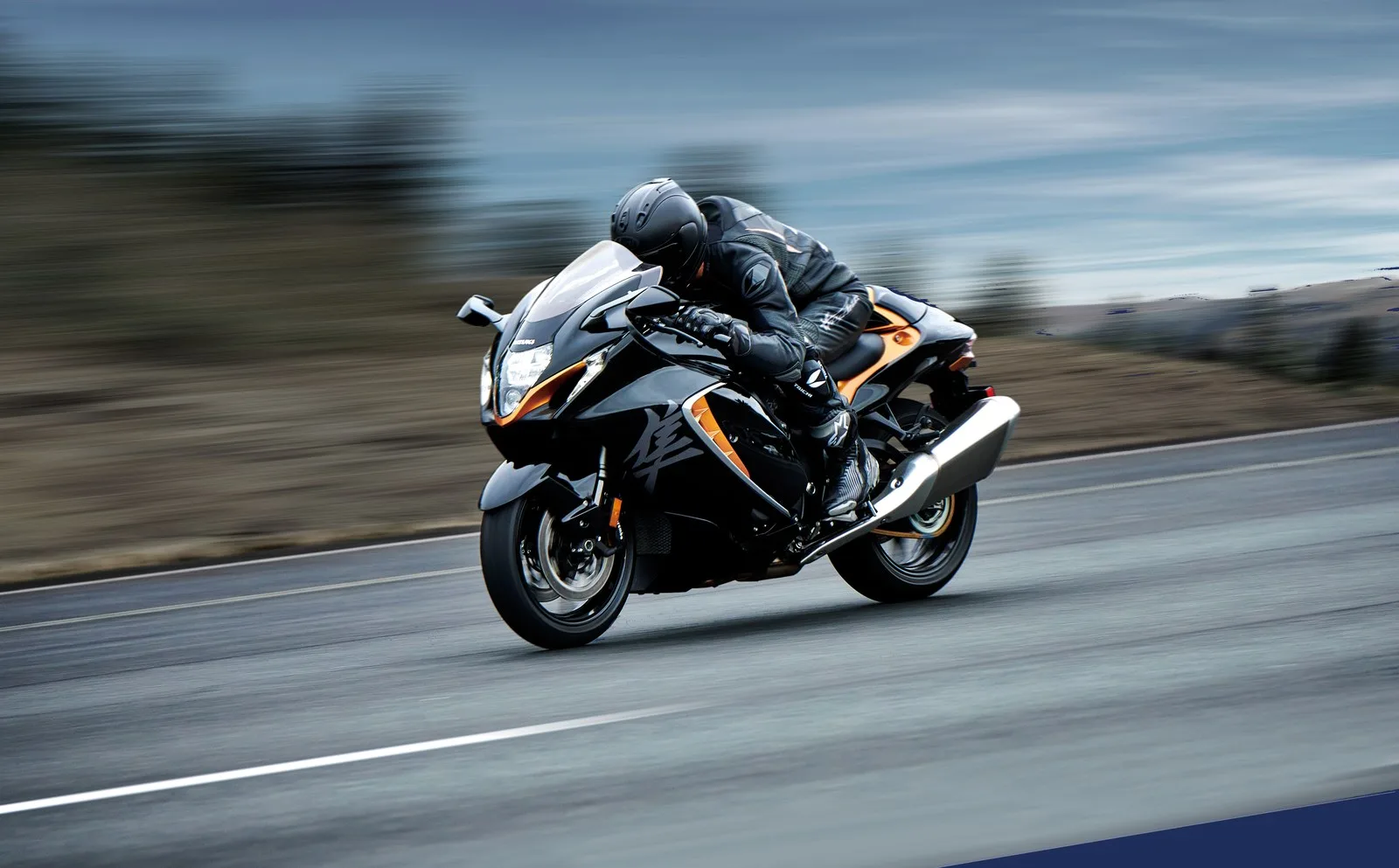
Suzuki Hayabusa riding at speed on the open road

Hayabusa: The Legend That Rewrote the Rules of Speed

The full Suzuki Hayabusa story, in order: from the 1990s race for the “world’s fastest motorcycle” to the 2026 model.

Category: NewsSeptember 27, 2026About a 6-minute read
1998The year the Hayabusa was unveiled
3generationsplus a fresh update for 2026
200thousand+motorcycles produced by 2022
48countrieswhere the Hayabusa is sold today

The motorcycle world is full of famous names, but only a few ever become legends. The Suzuki Hayabusa is one of them — the machine Suzuki launched more than a quarter of a century ago that shattered speed records and redefined what a premium sport bike could be. In this article we tell its story from the very beginning: what the race for speed looked like before it arrived, why it got its name, and how it evolved through three generations all the way to the 2026 model.

  1. 1989

    The Race for the “World’s Fastest Motorcycle” (1989 to 1999)

    Before the Hayabusa arrived, the title of “world’s fastest production motorcycle” was fiercely contested among the Japanese manufacturers. A production motorcycle is one that is built and sold to the public through dealerships — not a race bike designed only for the track.

    • Rival Japanese manufacturers traded the “fastest” title more than once during those years, with every new model trying to beat the previous record.
    • When the Hayabusa arrived, it beat the previous record by at least 16 km/h — a huge margin in the world of top speeds.

    If Suzuki wanted to enter this race — and win it — it had to offer something completely different.
  2. 1998

    Suzuki Unveils the Hayabusa in Germany (1998)

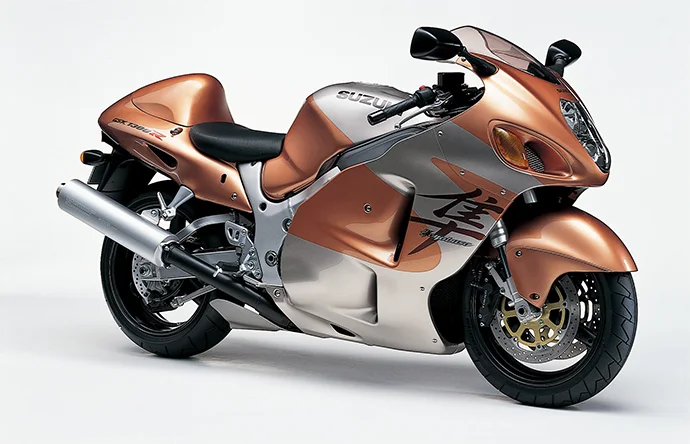
    At the INTERMOT motorcycle show in Germany in 1998, Suzuki revealed its new Hayabusa GSX1300R for the first time. The bike was built around the concept of the “Ultimate Sport” — the very best a road rider could ask for — combining high power, stable handling and aerodynamic styling.

    The first Hayabusa GSX1300R in copper and silver
    The first Hayabusa as presented by Suzuki — Photo: Suzuki

    A Name With a Message

    In Japanese, “Hayabusa” means peregrine falcon — one of the fastest birds on Earth. It is written with the Japanese character “隼”, which you can still see on both sides of the bike today.

    The name was no accident. The peregrine falcon preys on the blackbird — the very nickname carried by the fastest rival motorcycle at the time. In other words, the name was an open statement of intent: to take the title.

    Unusual Looks… for a Clever Reason

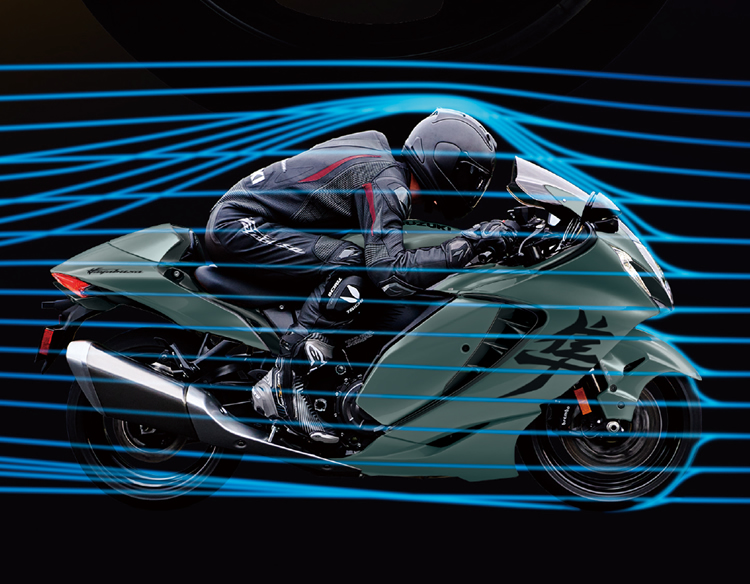
    Some people found the Hayabusa’s shape strange at first, but designer Koji Yoshiura drew it with one clear goal: to cut air resistance as much as possible. Suzuki even drew inspiration for some of its lines from samurai armour and helmets. It is this aerodynamic design that gave the Hayabusa the identity everyone recognises at first glance.

    A rider tucked in on the Hayabusa with airflow lines around the bike
    Air flowing around the bike and rider — Photo: Suzuki
  3. 1999

    The First-Generation Hayabusa Hits the Market — and Breaks the Record (1999)

    The Hayabusa went on sale in Europe and North America in 1999, powered by a 1,298 cc four-cylinder engine producing 175 PS, with a ram-air system that feeds cooler, pressurised air into the engine for more power at high speed.

    312 km/htop speed recorded by radar
    9.86 secondsfor the quarter mile (about 400 m)

    These figures were recorded by the American magazine Cycle World in its famous test that same year. With them, the Hayabusa took the title from its rivals by a margin no production motorcycle had ever achieved — and it remains the highest top speed the magazine has ever recorded for a production motorcycle.

  4. 2000

    The “300 Agreement”: When the Hayabusa Became Too Fast (2000)

    This heated race for speed raised fears of regulatory intervention in Europe. So in 2000, Japanese and European manufacturers reached an informal agreement among themselves — known as the “Gentlemen’s Agreement”, a commitment with no binding law behind it — to electronically limit top speed to around 300 km/h.

    That is why the original 1999 model, which had no speed limiter, became a prized piece for collectors. Remarkably, the Hayabusa stayed “king” despite the agreement, because its value was never about top speed alone — it was about power, stability and comfort together.

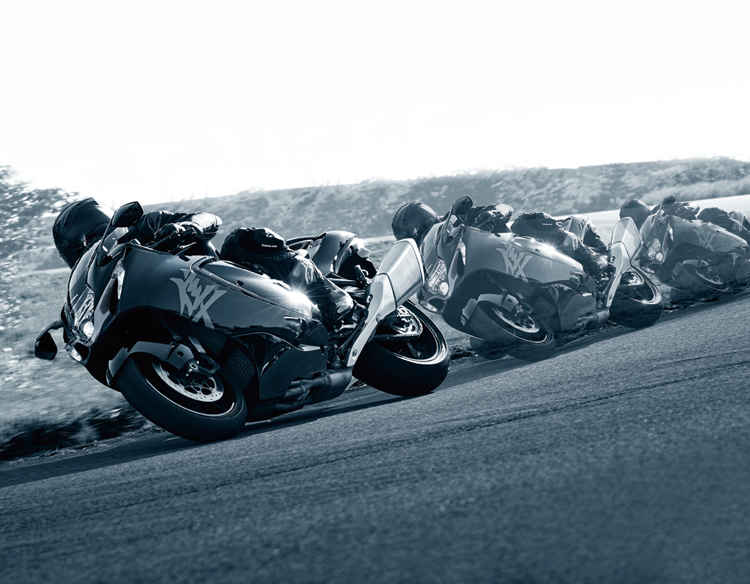
    A group of Hayabusa motorcycles leaning into a corner on track
    Still the “king” despite the speed limit — Photo: Suzuki
  5. 2008

    The Second-Generation Hayabusa: More Power, Smarter Control (2008)

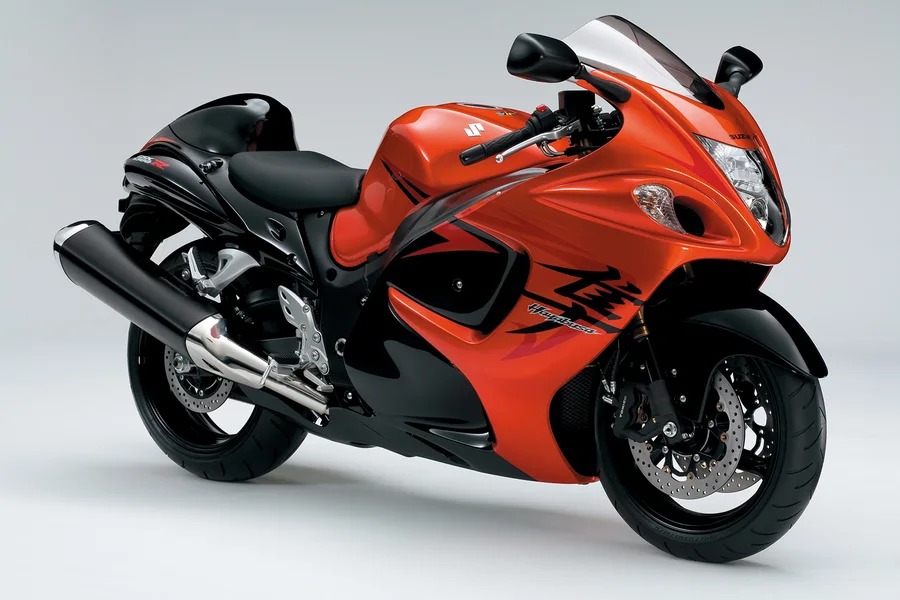
    In 2008 Suzuki introduced the second generation with a larger 1,340 cc engine producing 197 PS. It kept the signature shape with sharper touches, and added new technologies, most notably:

    Second-generation Hayabusa, 2008 model, in orange and black
    Second generation, 2008 model — Photo: Suzuki
    • Dual throttle valves: sharpen the engine’s response when you open the throttle and make the power delivery smoother.
    • Selectable riding modes: let the rider change the engine’s character to suit their mood and the road — from full power to a gentler feel.
  6. 2014

    Anti-Lock Brakes Become Standard on the Hayabusa (2014)

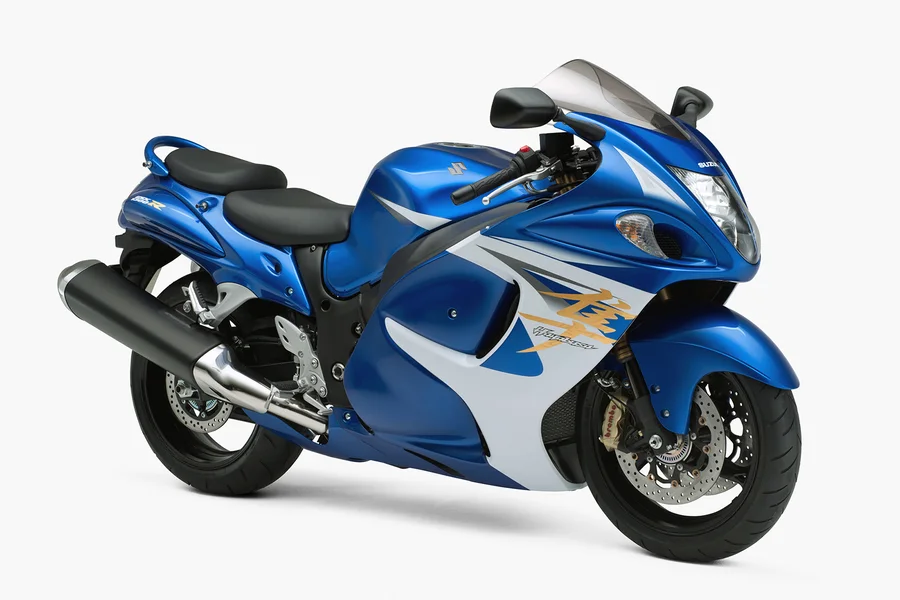
    In 2014 the anti-lock braking system (ABS) — which stops the wheels from locking and skidding under hard braking — became standard equipment on the Hayabusa in a number of markets, a clear step forward for safety.

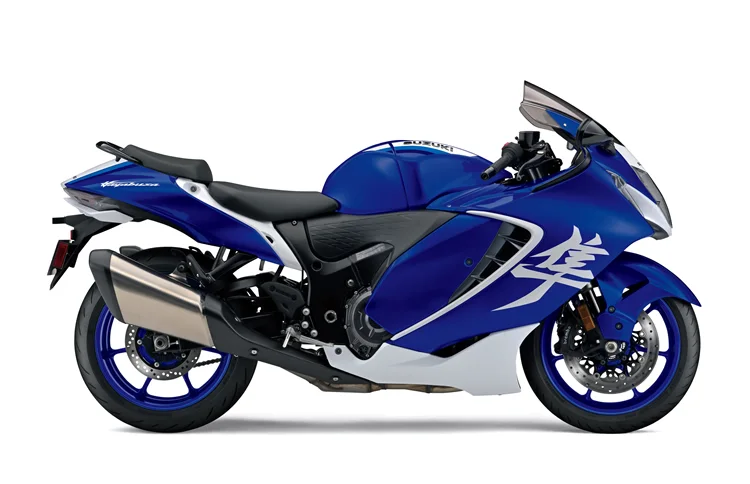
    Hayabusa 2014 model in blue and white
    Hayabusa 2014 model — Photo: Suzuki
  7. 2021

    The Third-Generation Hayabusa: Where Power Meets Intelligence (2021)

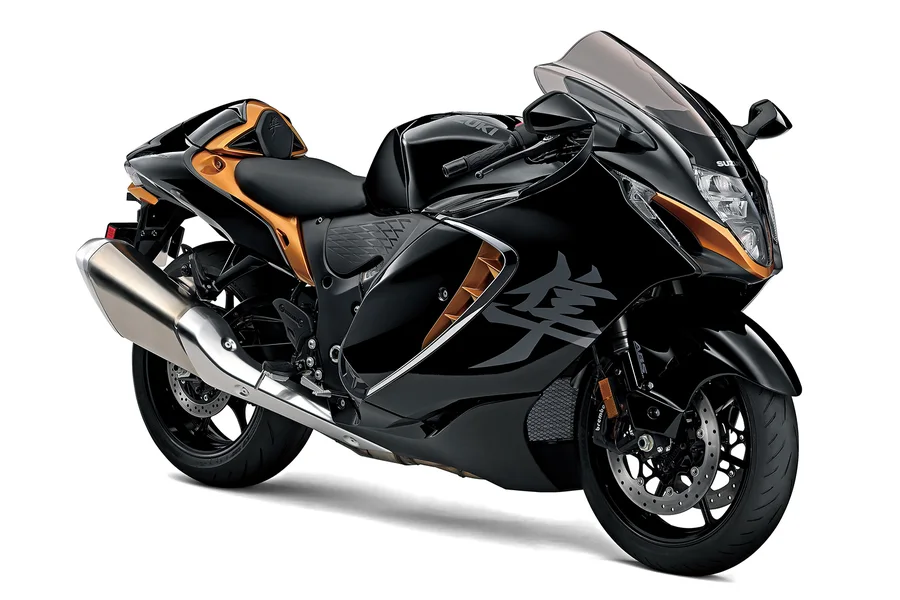
    More than twenty years after the original launch, Suzuki unveiled the third generation in 2021 with an even sleeker, more forward-leaning design. Its engine produces around 190 PS, it weighs 264 kg fully fuelled, and it meets the latest European emissions standards.

    Third-generation Hayabusa, 2021 model, in black and gold
    Third generation, 2021 model — Photo: Suzuki

    The biggest leap, however, was in electronics, through Suzuki’s intelligent rider-assist system, which manages many aspects of performance, including:

    • Power modes and how the engine responds.
    • A system that helps you launch with maximum acceleration without losing tyre grip.
    • Smart braking that prevents the wheels from skidding — even while cornering.
    • A feature that stops the bike from rolling backwards when you stop on a slope.
    • Cruise control, which holds a steady speed without you having to keep your hand on the throttle.

    With these technologies, the Hayabusa was no longer just a fast motorcycle — it became a long-distance sport tourer that combines immense power with safety and comfort.

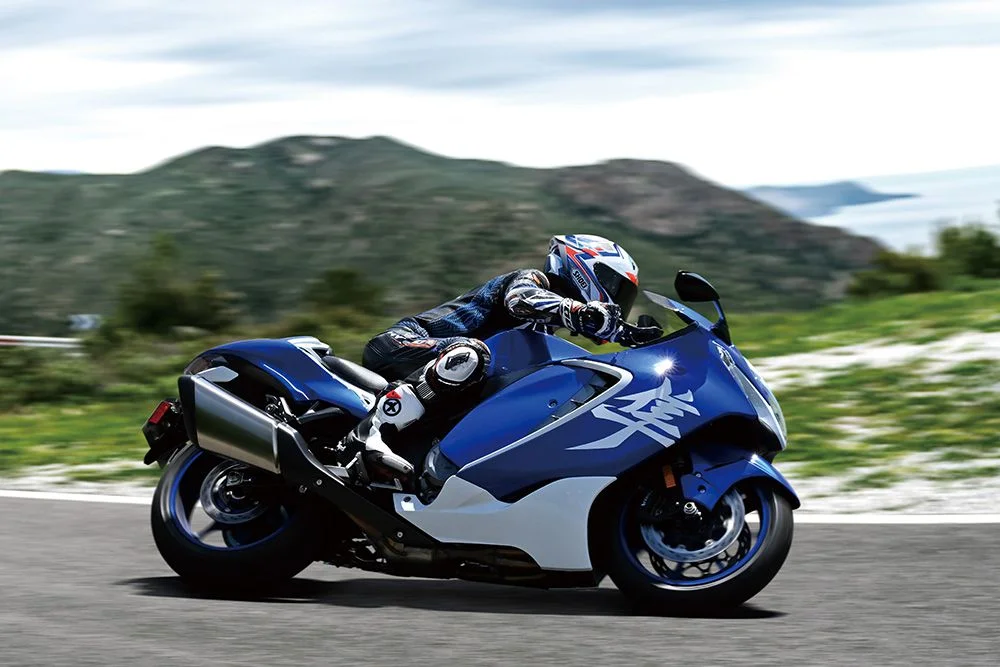
    Blue Suzuki Hayabusa leaning into a mountain corner
    Stable through the corners thanks to smart electronics — Photo: Suzuki

    How Many Horsepower Does the Hayabusa Have?

    It depends on the generation: 175 PS (metric horsepower) for the first generation (1999), 197 PS for the second (2008), and around 190 PS for the third (2021), which meets the latest European emissions standards.

  8. 2023

    A Quarter Century of Passion: The Hayabusa Anniversary Edition (2023)

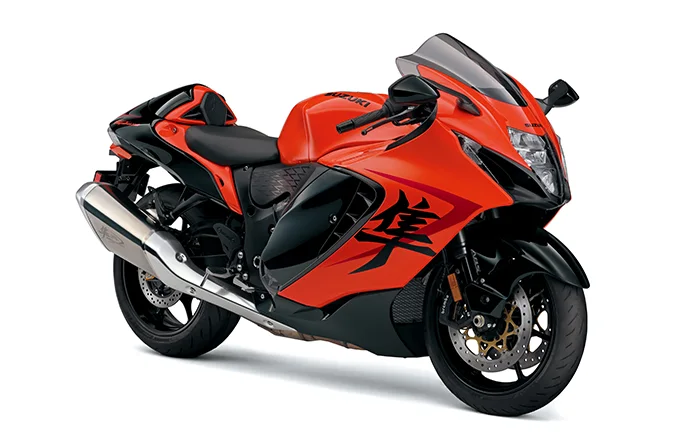
    According to Suzuki’s official 2023 announcement, production of the Hayabusa across all generations had passed 200,000 motorcycles by 2022, and it is sold today in 48 countries around the world. To celebrate 25 years since its unveiling, Suzuki released an anniversary edition in orange and black, inspired by the first generation.

    Hayabusa 25th anniversary edition in orange and black
    The 25th anniversary edition — Photo: Suzuki
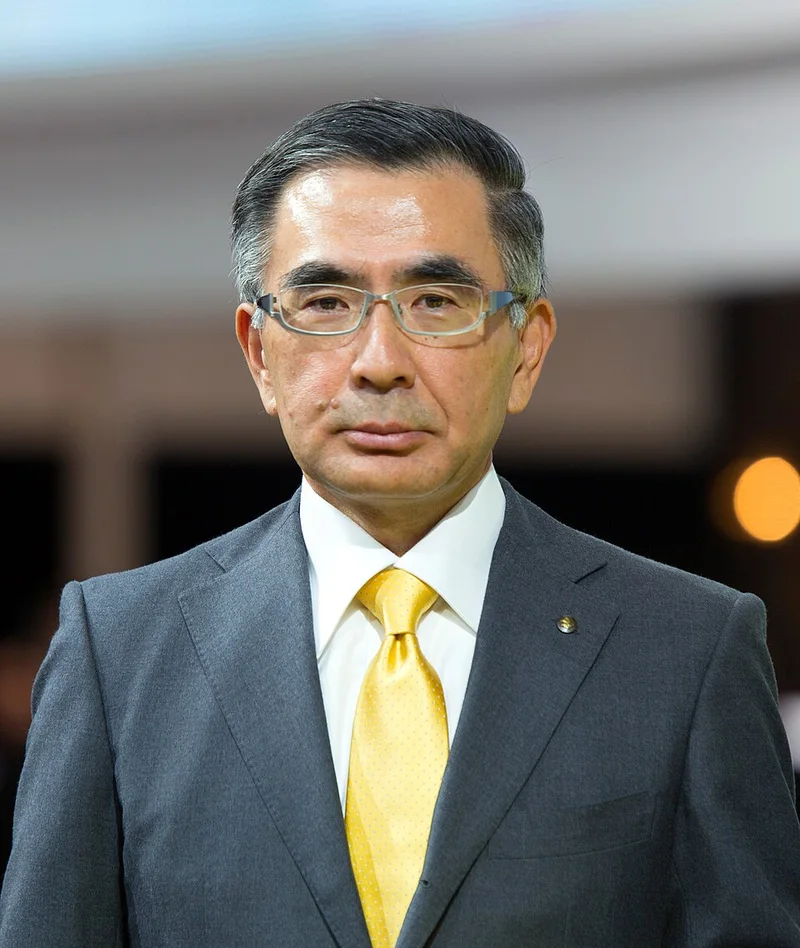
Toshihiro Suzuki, President of Suzuki Motor Corporation
25years of Hayabusa
Photo: MB-one (Frankfurt 2017), licensed CC BY-SA 4.0
From the 25th anniversary announcement — 2023

A Word From Suzuki’s President

“The Hayabusa series has been a flagship model representing Suzuki, and has fans all over the world.”

Toshihiro Suzuki, President of Suzuki Motor Corporation

He made these remarks in Suzuki’s official announcement marking 25 years since the Hayabusa was unveiled, adding that the current model is the best to date.

  1. 2026

    Hayabusa 2026: Finishing Touches to a Legend (2026)

    For Hayabusa 2026, Suzuki continued to refine the motorcycle with carefully chosen updates. According to Suzuki’s official global website, the highlights are:

    • A lighter lithium-ion battery: smaller than a conventional battery, and it delivers a more stable voltage even when every electrical system is running at once.
    • Improved cruise control: holds your chosen speed without keeping the throttle open, across a wide range of roughly 31 to 200 km/h.
    • Three launch-assist modes: from a gentle start suited to everyday roads to the quickest launch possible.
    • Three power modes: from sharp, strong response to a softer response with reduced output for everyday riding.

    Suzuki also introduced a limited special edition in a distinctive pearl blue, with a special emblem on the fuel tank, a unique muffler and a single-seat cowl as standard.

    Hayabusa 2026 special edition in pearl blue
    The 2026 special edition in pearl blue — Photo: Suzuki

Speed Is a Passion… Safety Comes First

The Hayabusa’s power deserves respect. That is why we always remind riders that the place to explore high performance is on circuits and at licensed events, while on public roads your safety and the safety of those around you come first. Follow traffic rules and speed limits, wear an approved helmet and proper protective gear, and make the most of the safety systems Suzuki has built into this motorcycle. You can also explore the safety gear every rider needs.

In Closing

The Hayabusa is not just a fast motorcycle — it is an engineering story that began with a bold challenge in 1999 and continued through constant development until it became an icon recognised by riders everywhere. If you dream of experiencing this legend for yourself, the Suzuki Barayan team will be happy to welcome you and introduce you to the Hayabusa up close. If you want even more sport performance, browse Suzuki’s super sport motorcycles, see the fastest Suzuki motorcycles, or explore all Suzuki motorcycles.

Live the Legend

Get to know the Hayabusa 2026 up close — full specifications and available colours — and contact us to ask about availability.

Hayabusa 2026 Price & Specs
Sources (5)
  1. Global Suzuki — Hayabusa digital archive: globalsuzuki.com
  2. Global Suzuki — 25th Anniversary model announcement (June 30, 2023): globalsuzuki.com
  3. Global Suzuki — Hayabusa 2026 product page: globalsuzuki.com
  4. Cycle World — “The Suzuki Hayabusa”: cycleworld.com
  5. Wikipedia — Suzuki Hayabusa: wikipedia.org

Motorcycle photos are official Suzuki images. Photo of Suzuki’s President from Wikimedia Commons (photographer MB-one, licensed CC BY-SA 4.0).

Top